


Belinda Dorsett & Mathew Hatcher: The Mossy Cafe legacy of community and good business


Community.
It's a word everyone bandies around a lot these days. Politicians are the most obvious culprits. Now entrepreneurs in our Instagram feeds are at it too, telling us that we need to create a 'community' around our personal brands. The notion of giving to those around us is something most of us talk the talk on, but don't always walk the walk. And certainly the assumption is that if you devote your time and energy to your community, it won't be profitable or commercially successful. We assume we can't have it all. So it's a rare human, and an even rarer breed of businessperson, who can straddle that balance between community and commercial.

I am blessed to know not one, but two, of these rare unicorns. This month's Human Gold introduces you to them both: Belinda Dorsett and Mat Hatcher.
Knowing these two changed my life. I know that's a big call, but it's true. Our friendship started at a particular address, 31 Pacific Street, Mossy Point, also known as The Mossy Cafe. The Mossy to locals. 'Home,' as Mat described it in our interview. Yes, a second home, four hours from my Sydney base. Owned by Belinda for close to ten years and recently sold to new owners, who will now take The Mossy into its next chapter.
Personally, The Mossy has been the backdrop to my return to music. I have sat at my favourite tables and planned new businesses. We have held birthday steamboat feasts there after hours. I have rehearsed for gigs after closing. It has been the venue for countless coffees and conversations, and the sort of place where a quick hello could become half a day. It was at The Mossy that I first properly met Mat. At the time, he was President of the Batemans Bay Chamber and I was Director of Sales and Marketing at Mogo Wildlife Park nearby. I was keen to connect with him. Mat didn't hesitate to tell me to introduce myself to Belinda and passed me her number.
I will always be grateful that he did.
Although only a year apart, Belinda is the kind of big-sister presence I have needed so many times in life. I know she has been that for Mat too, as well as for many of her customers, suppliers and staff across the three locations she grew from the original Mossy on Pacific Street. Belinda's career took her from Canberra to London, back to the nation's capital and then to Mossy Point, but her decade at The Mossy is a chapter that has defined her. She will long be 'Belinda from The Mossy', even now that the chapter has closed.
Mat is the co-founder of Guerrilla Roasters and happens to be Mayor of Eurobodalla Shire, a former President of the Batemans Bay Chamber and a wearer of what some may argue are too many hats. He flies from phone call to opportunity to project to meeting to Zoom, sometimes so quickly the rest of us are left holding on to the furniture. And yet he has a definite home at The Mossy.
These two have worked together, been supplier and customer, employer and employee, sparring partners and 'sister-and-brother-from-another-mother for close to ten years.
"So I started our interview by asking them not to introduce themselves, but to introduce each other. I am glad I did".
Mat went first. In 45 seconds he described Belinda as an 'undocumented, unskilled migrant to the South Coast' who had somehow upskilled herself, become a local and turned one cafe into a successful group. It was very Hatcher. Cheek first, truth immediately after. He said that, as much as she hates being acknowledged for it, Belinda supports the region through almost every event and initiative that happens.
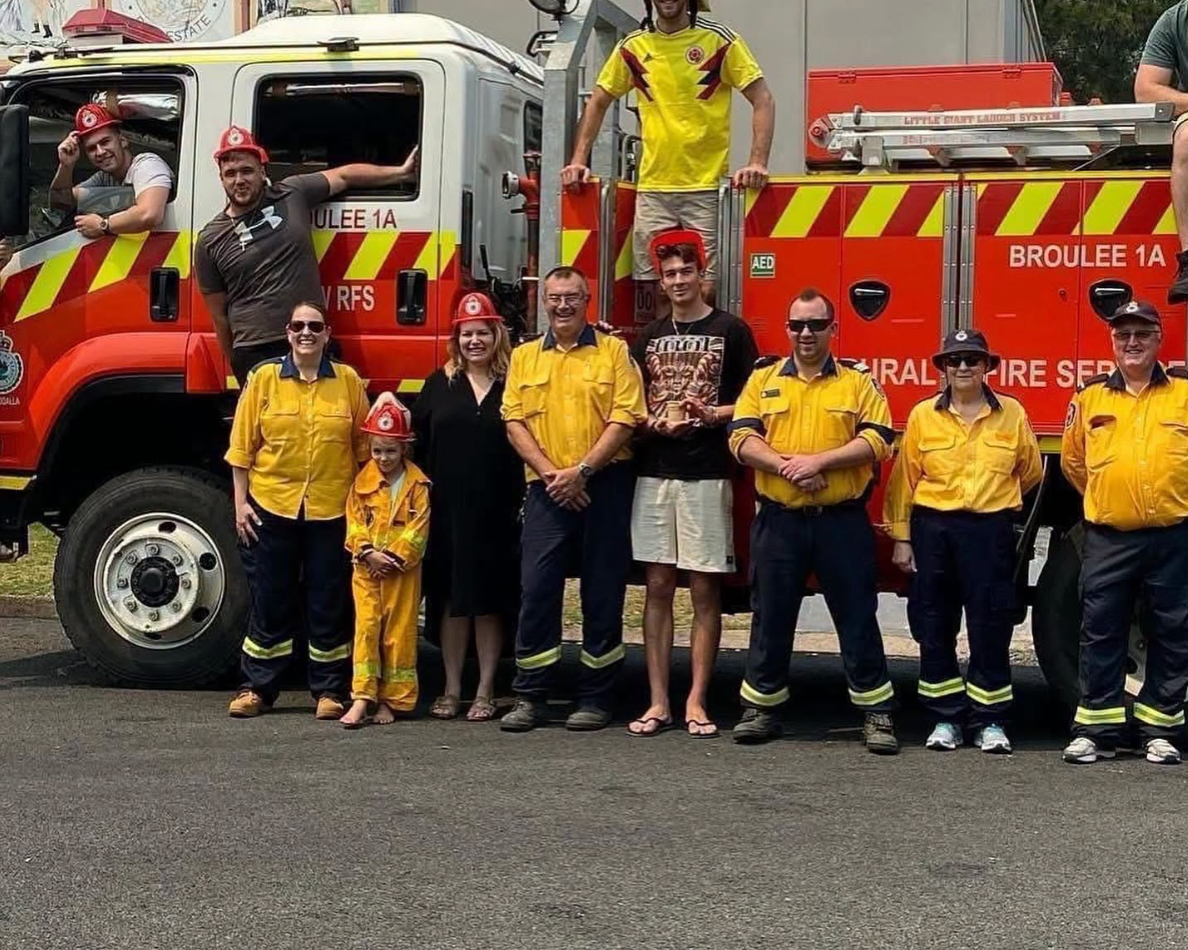
Belinda introduced 'Matthew with one T' as our marvellous mayor, entrepreneur extraordinaire and owner of so many businesses she couldn't be expected to remember them all. Then the jokes gave way to something more serious. She called him a local hero and spoke about how he stepped up during the Black Summer fires. 'I don't think people, to this day, know the shit that he went through to help people in dire straits during that period,' she said.
They first met at a charity event at The Bower, raising money for a rescue helicopter service. Mat was the emcee. Belinda remembers thinking he was a bit up himself. 'And I was right,' she said, before laughing and conceding that he later proved her wrong. Someone connected Mat with Belinda's business partner Patrick, who approached him about The Mossy. Within days, Mat was sitting down for what was part chat, part interview and part mutual decision to give it a go.
This was 2016. Belinda and Patrick had not owned The Mossy for long and, in Belinda's words, were beginning to realise they had no idea what they were doing. Mat did not exactly apply for a clearly advertised role. It was more organic than that. They saw something in each other and decided to work together.
Mat still remembers walking in on his first day. The coffee machine sat on a small island, set back from where it is now. Seven people were gathered around it, most of them young, all dressed in denim shirts, and according to Mat, none of them knew how to make coffee. Across the room was the milkshake station. Troy Crisp from Alfresco popped his head up and asked, 'Mat, what are you doing here?' Different times, Mat said. Different times indeed. I have sung five or six gigs at The Mossy or its sister location, Mossy at the Gardens. Belinda's belief in me came very early in my own metamorphosis, when I was still deciding whether I might be good enough to pursue music again.
Belinda gave me the opportunity before I had fully given it to myself, and the same for many, many others I know.
It is the same kind of belief that helped give Guerrilla Roasters its push. Mat recalled story after story in which he took a leap and knew Belinda would give him the friendly shove off the proverbial cliff. Not blind encouragement. Belinda is far too astute for that. More like, 'Yes, this could work, so stop talking about it and do it.' Sometimes that belief looked like moral support. Sometimes it looked like buying the beans Mat needed so he could roast them and sell the coffee back to her. But first came the coffee van.
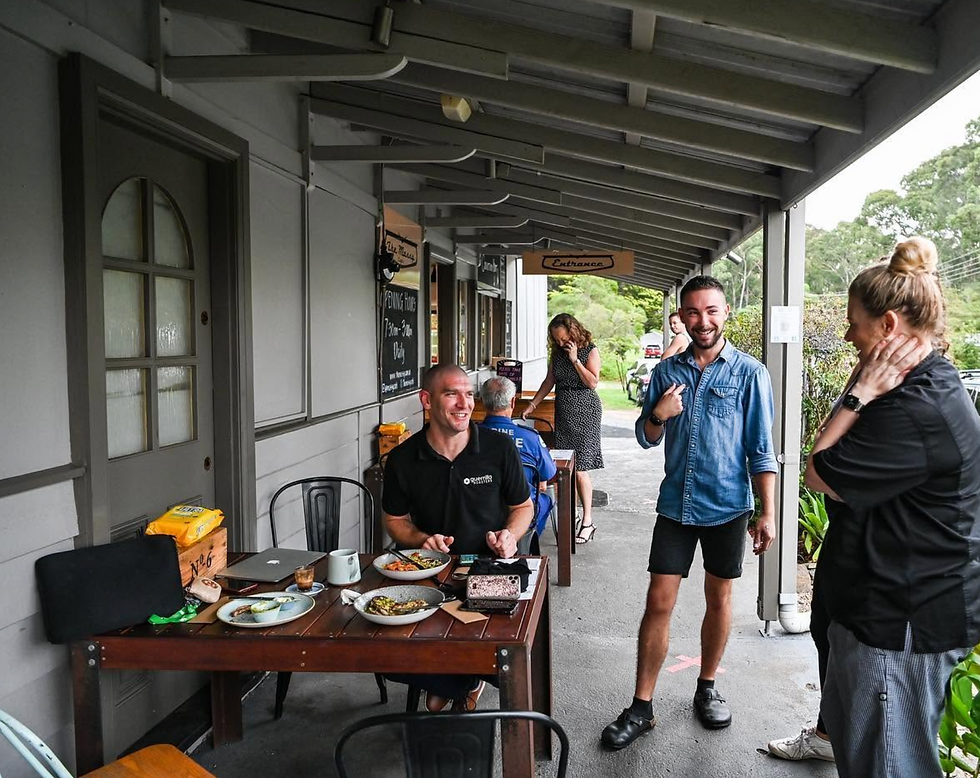
Mat had always wanted to run coffee at the local markets. Those positions were tightly held. Once you had one, you kept it. He had previously told one operator that if he ever wanted to sell, Mat wanted the first call. Much later, that call came. The business and van would cost $40,000. Mat did not have $40,000. He pulled together what he could, borrowed the rest from a friend in Canberra and bought it anyway.
His plan was simple enough. He thought he was buying the Saturday market business. He would tell Belinda and Patrick that he could no longer work Saturdays, but he wanted to remain at The Mossy. Then, as the former owner handed over the keys in Mat's driveway, he casually mentioned the Monday-to-Friday coffee run around Batemans Bay. Did Mat want to come along and see that part of the business too? Of course he did.
What Mat found was an underused weekday business sitting there waiting to be built. Suddenly this was not a Saturday side project. If he wanted to make it work, he couldn't keep one foot in the van and the other at The Mossy. So he left. Belinda remembers it as Mat leaving and almost immediately going into direct competition with them, parking his coffee van around Broulee and Mossy Point. Mat remembers it as entrepreneurship. Both versions are probably true. The van became a six-day-a-week business. Mat added another van for Moruya and events, hired Lewis, who would later become his Guerrilla Roasters business partner, and brought in another employee for Batemans Bay. Before long, Mat had built a business that could operate without him. Which, for Mat, meant only one thing: he needed another idea.
He returned to The Mossy briefly and worked under the new manager, Dean. Mat trying to work under Dean and Belinda was never going to last. He is many things, but easily contained is not one of them. His next thought was that roasting their own coffee could save money for the van business. If they could also secure one cafe customer the size of The Mossy, the roasting business might break even.

They made the coffee. Then they hit a small problem. They had spent their money on the roaster and didn't have enough left to buy the green beans needed to produce Belinda's first proper order.
Mat went back to her with another characteristically non-traditional deal. Would The Mossy pre-purchase nearly $10,000 worth of coffee, at a discount, so Guerrilla could buy the beans, roast them and then supply that coffee back to The Mossy? Belinda said yes.
Even she had forgotten that detail until Mat reminded her during our interview. 'Yes. I remember. Yes, yes, yes,' she said, as the story came back. She had bought the stock so Guerrilla could create the product she was buying from them. Mat laughed and said it was fairly representative of their entire relationship.
There was more. Belinda gave Guerrilla free commercial space at The Mossy. In return, Guerrilla provided ten kilograms of coffee a month as rent. On a spreadsheet, the arrangement may have looked wildly favourable to Mat and Lewis. Mat freely admits they were on a very good wicket. They were probably fed more than the rent was worth in food and coffee alone.

But it worked for The Mossy too. The coffee was roasted locally, right there on site. Customers could see the process, walk over, ask questions and understand more about what they were drinking. Lewis worked shifts on The Mossy's machine, so the person making your coffee might also have helped roast it. Years before cafes everywhere began making the roasting process part of the experience, Belinda had opened a section of her business to two local blokes with a second-hand machine and a plan.
It was not always a beautifully curated experience. Belinda pointed out that the roasting area was often so messy that neither customers nor her staff could actually walk through it. That is the real version of innovation in a small business. Less exposed brick and mood lighting. More bags, boxes, borrowed money and somebody saying, 'We'll work it out.'
Mat says Guerrilla Roasters would not exist without Belinda and The Mossy. Not in the form it does today. They did not have the capital to lease their own premises and gamble on whether customers would follow. Being onsite removed the logistics and gave the business an immediate foundation: Mat's vans and Belinda's cafe. From there, it grew organically.
That story tells you a lot about Mat's style of business. He flies by the seat of his pants and looks for deals that aren't necessarily traditional but allow both sides to win. It also tells you a lot about Belinda. She is open to change, but she isn't careless. She can read people better than almost anyone I know. Once she approves of you, she will back you. Properly.
I've experienced it myself. Mat called me shortly after our first fateful breakfast at The Mossy, where we had met to discuss Mogo Wildlife Park and the Batemans Bay Chamber. 'Can you get a logo designed?' he asked. 'For what?' I said. He wanted to start a destination campaign, Visit Batemans Bay. The Mossy, he assured me, would be on board.

What followed was a campaign with millions of views, born from text messages, winging it, pulling favours and asking people to move before every detail was perfect. Belinda agreed to put Visit Batemans Bay signage in her window. She offered The Mossy as our first photoshoot location. Belinda said yes. She always said yes. But don't mistake her for a people-pleaser or a fool. Far from it. Belinda said yes because she knew we were trying to create even a small ripple of promotion for local businesses when the big boys weren't doing enough. She says yes to people she trusts and ideas she believes will matter. She is also perfectly capable of saying no, and you will know when she means it.
Belinda says yes to people she trusts and ideas she believes will matter. She is also perfectly capable of saying no, and you will know when she means it.
The past four years have been brutal for hospitality on the South Coast. The fires came first, followed by COVID, then rising costs and customers with less money to spend. Belinda explained that revenue is never entirely within your control. You can work to bring more in, but you cannot get blood out of a stone. Costs are the part you can examine line by line.
At one point, The Mossy reviewed every supplier. Everything was on the table, including Guerrilla coffee. Some long-standing suppliers had to be changed because the numbers no longer worked. Belinda went to Mat openly. The issue wasn't the coffee or the relationship. The business was being squeezed and needed a better price.
Instead of becoming defensive, Mat looked for a way to meet her halfway. With a clearer commitment from The Mossy, Guerrilla could lock in future purchases of Brazilian beans at a set price, create certainty for itself and pass some of the saving back. They found a number that allowed both businesses to keep making enough money to stay viable.

That may be the least glamorous part of their story, but it is one of the most important. Community is not asking a supplier to lose money for you. Loyalty is not paying an unsustainable price in silence. Sometimes community is having the uncomfortable conversation early enough that both businesses can survive it.
As Mat said, if Belinda genuinely believed he had shafted her, he would not only have lost the account. They would not be sitting together ten years later, still laughing about gift vouchers, coffee rent and all the other deals that only made sense because they trusted each other.
Belinda came into The Mossy after senior corporate and government roles. She had never worked in hospitality. She remembers thinking, 'How hard can it be?' The answer, discovered while trying to generate enough income to employ more than 20 people, was bloody hard. And it kept getting harder.
The fires. COVID. A struggling economy. Another supplier email announcing another price rise or delivery fee. The knowledge that customers were struggling too, so menu prices couldn't simply rise every time costs did. Every day brought the same question: how do we protect the margin while still serving something people want and can afford? Belinda learned those lessons while living them.
Having people like Mat walk alongside her was invaluable. Sometimes 'sounding board' meant calling him and yelling until she had worked through the problem. Mat joked that he could put the phone down, pick it up from time to time and say, 'Yes, yes, you're right, Belinda.' There was SignGate, which both remember and neither needed to fully explain. Every long friendship has its own case law.

'Hatcher', as we call him, is a human roller-coaster. Belinda's words once, not mine. He knows it and is unapologetic about it. Get on that roller-coaster and it may feel white-knuckled, but your expectations of yourself will be blown to smithereens. You will find yourself operating at a completely different level because Mat assumes movement is possible and then starts moving.
Belinda is different. She notices the person underneath the pitch. She sees what might be possible, but she also sees the holes. If she believes in you, she will lend you the room, buy the beans, feed you, defend you and tell you the truth when you are kidding yourself. She even sticks up for you when the person having a go at you is you.
To movers and shakers like Mat, and me too, Belinda is a godsend. We know it. It is one of the reasons I wanted to mark the closing of her Mossy chapter with this article. The sale of a business can be reported as a transaction. Owner sells. New owner takes over. Doors remain open. But that does not come close to capturing what is being handed on.
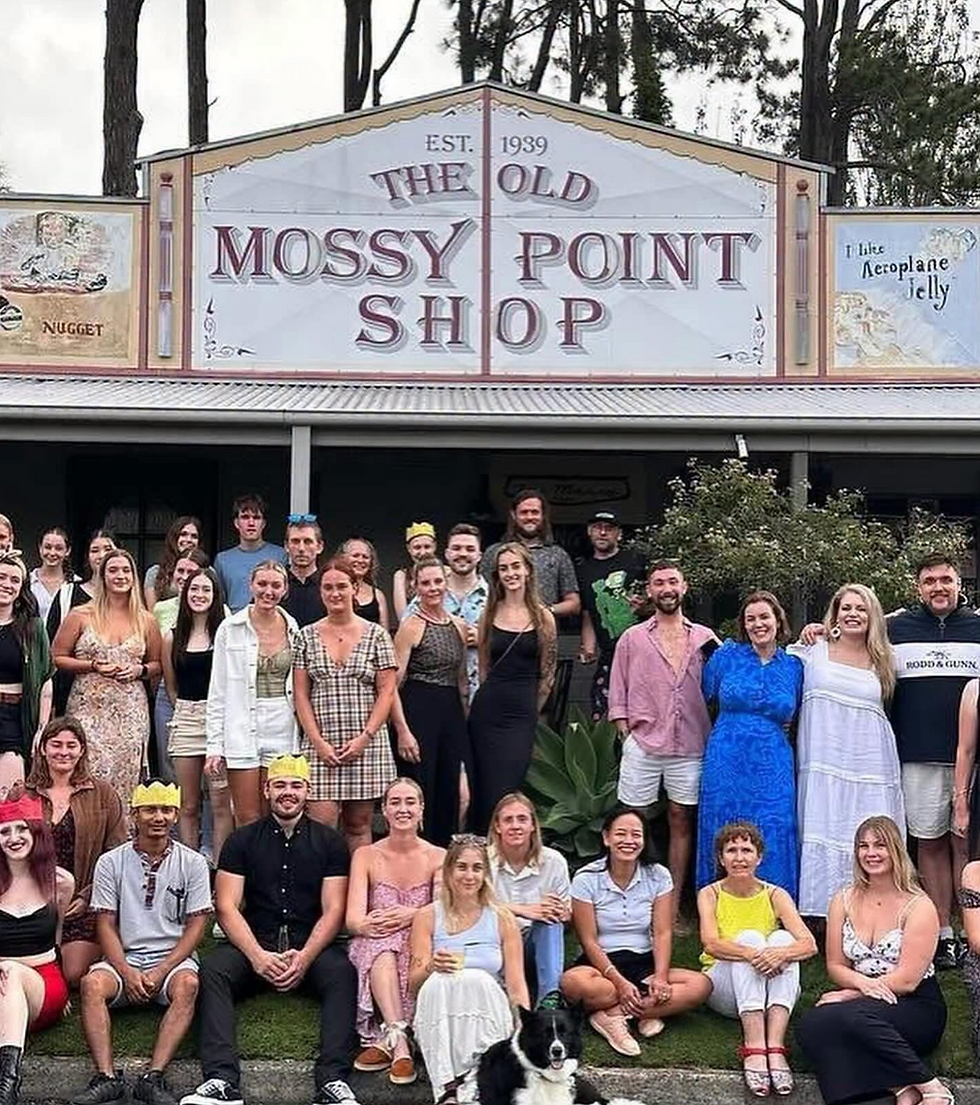
The new owners inherit a cafe, certainly. They also inherit a place where ideas were tested before they were ready, local businesses were given their first proper customer, staff learned lessons they carried elsewhere, campaigns were started over breakfast and people like me remembered parts of themselves they had put away.
The Mossy proved that community and commercial success are not opposites. Done well, they strengthen each other. The business created jobs, paid suppliers and sold an awful lot of coffee. It also created confidence, friendships, opportunities and stories that will continue long after the ownership paperwork has changed.
Mat helped make that happen because he sees possibility everywhere and has the nerve to ask. Belinda made it possible because she knows when a yes will give someone the start they need. Together, they created the kind of ecosystem people now build strategy decks about. They did it with borrowed money, handshakes, hard conversations, humour and trust.

So yes, Belinda Dorsett is HUMAN GOLD. Not because she ran a beloved cafe for a decade, although she did. Not because she supported every community event that came knocking, although she probably did that too. She is human gold because people leave her company believing a little more is possible for them, and because she so often puts something tangible behind that belief.
And Mat Hatcher is HUMAN GOLD too. Chaotic gold, perhaps. Gold with three phones ringing and another venture already half underway. But gold all the same. He connects people, starts things, drags ideas into motion and remembers to make room for the other person to win.
That is their story. Belinda would say she does not want the acknowledgement. Mat would probably negotiate for a larger headline. They will both make jokes to avoid the emotion of it. But The Mossy is part of who they are, and both of them are part of what made it home.



Comments